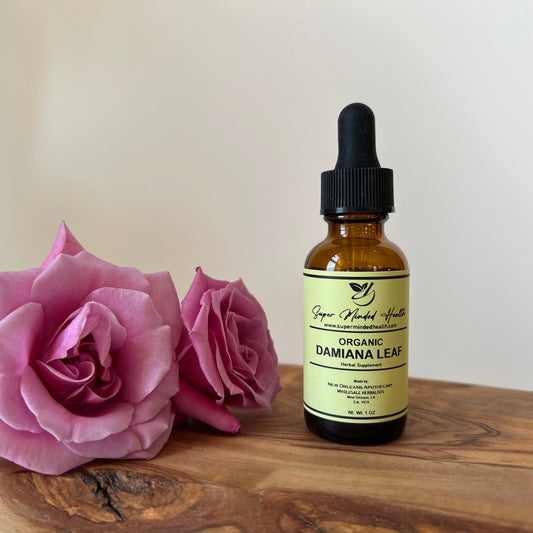
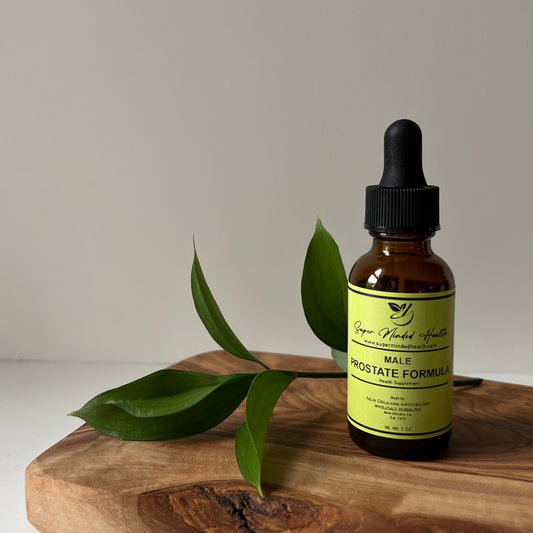
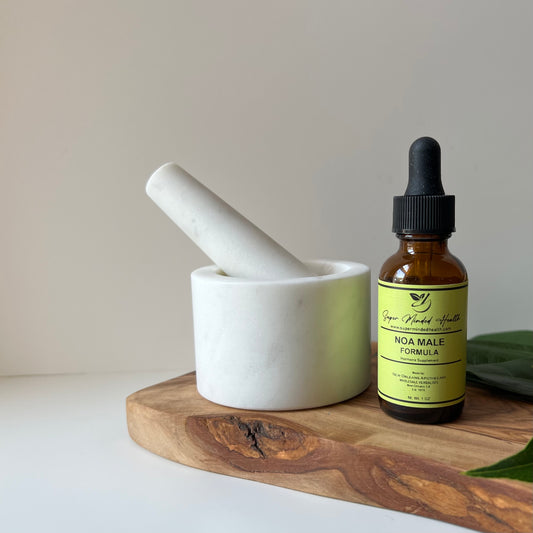
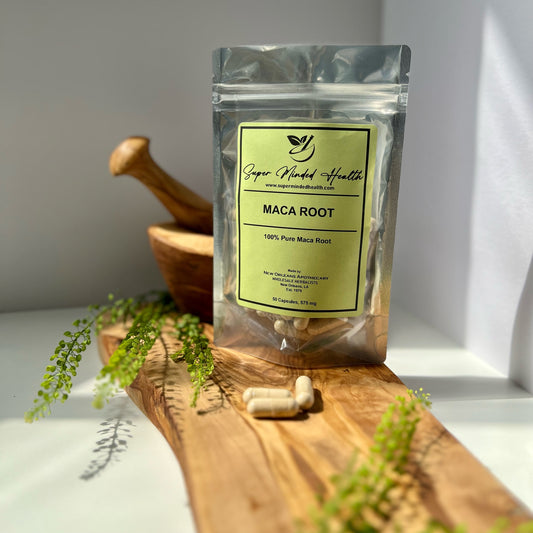
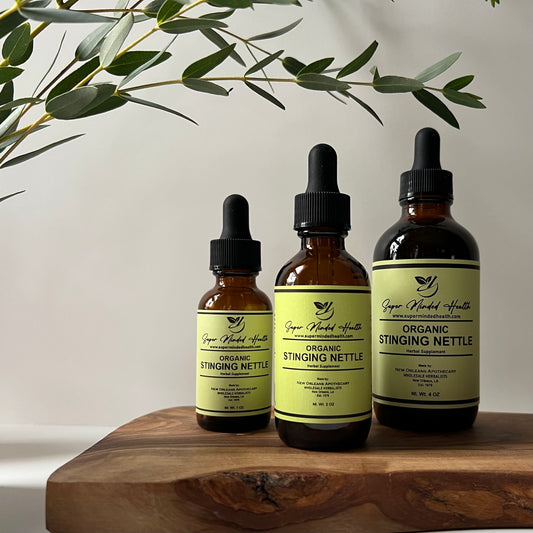
A collection of herbs traditionally used to support men's vitality and prostate wellness — saw palmetto, tongkat ali, stinging nettle root, catuaba bark, and our Male Prostate Formula and NOA Male Formula tinctures.
Prostate-Focused Herbs vs. Vitality Herbs
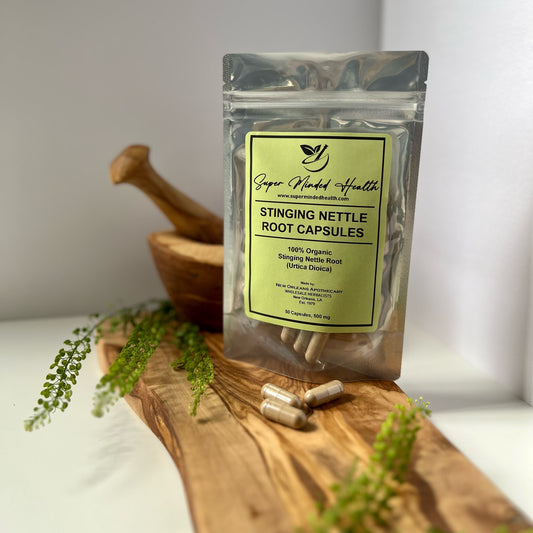
This collection splits into two traditional categories. Saw palmetto and stinging nettle root are traditionally used specifically for prostate wellness, tied to their naturally occurring compounds' traditional role in supporting healthy urinary flow as men age. Tongkat ali and catuaba bark work differently — traditionally used as vitality and stamina herbs, valued for supporting energy and libido rather than the prostate specifically. Knowing which category a given herb falls into helps you choose the one that actually matches what you're looking to support.
Where These Herbs Come From
Saw palmetto grows low and scrubby along the southeastern American coast, and its berries have a documented history of traditional use going back to Indigenous communities of that region long before it became a mainstream men's wellness herb. Tongkat ali, sometimes called "Malaysian ginseng" even though it's botanically unrelated to true ginseng, comes from the rainforests of Southeast Asia, where its root has a centuries-long traditional reputation as a vitality tonic. Catuaba bark has a similar story in Brazil, where different regional traditions have used different species under the same name, all sharing a traditional reputation as a stamina and mood-supportive herb.
Why Saw Palmetto Is Different From the Others
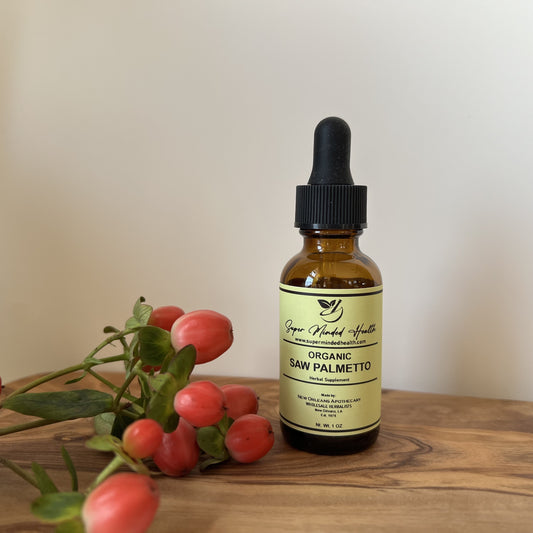
Saw palmetto's traditional mechanism sets it apart from the vitality herbs in this collection. Its naturally occurring fatty acids and plant sterols are traditionally understood to interact with the same hormonal pathway responsible for age-related prostate changes — which is why it's the one herb here most closely associated with prostate structure specifically, rather than energy or libido more broadly. That's also why it's worth a conversation with your healthcare provider if you're monitoring PSA levels, since that pathway is the same one some prostate medications target.
If you're currently monitoring PSA levels, a few herbs here (saw palmetto in particular) are worth mentioning to your healthcare provider before starting, as noted on those individual listings.